
Extracurricular

How to Present Research on College Applications

Where research belongs across Activities, Honors, essays, and interviews
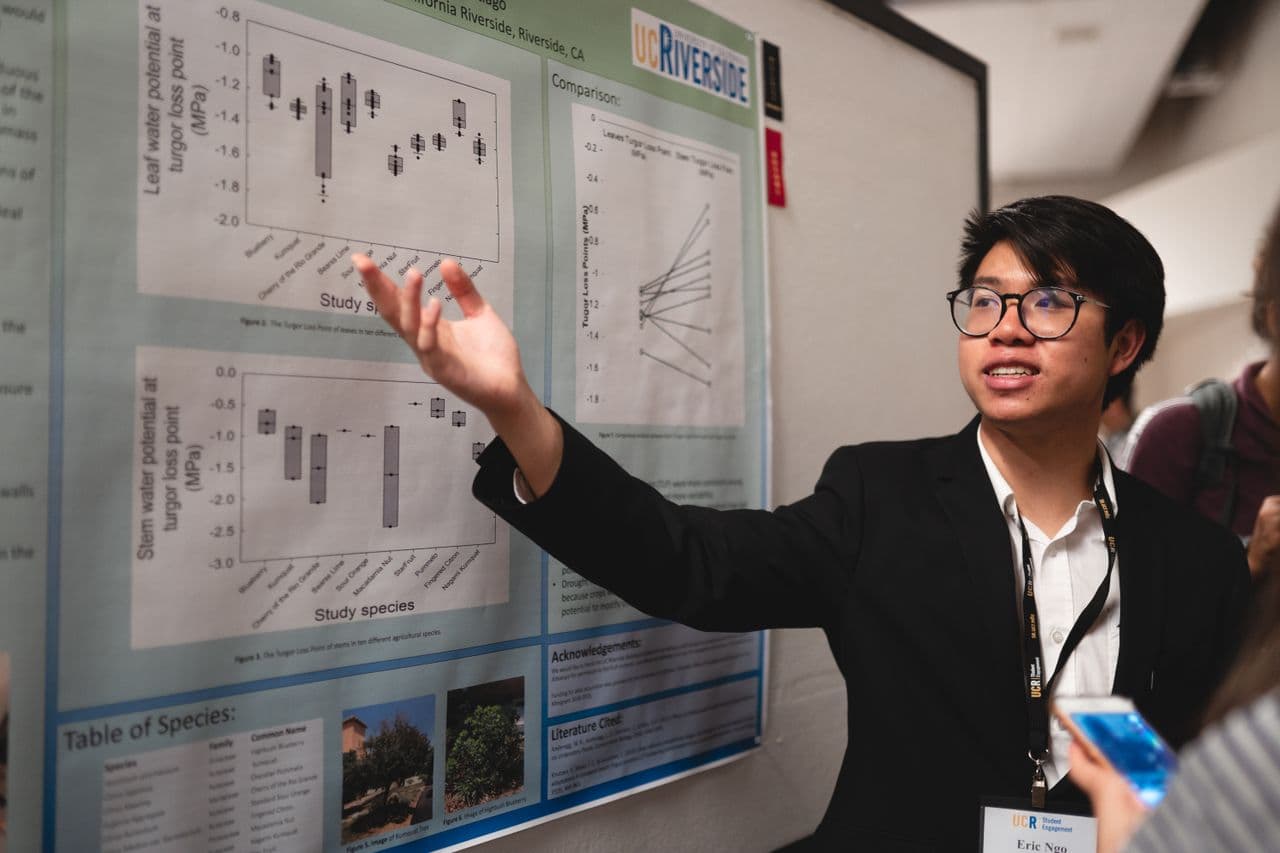
How to Present Research on College Applications
Published:

Fareen S

Researcher and education writer

Summary

Present research by splitting it across the application. Your role, methods, and output go in the Activities List, publications and competition placements go in Honors, and your reasoning and reflection go in essays. Write every version in plain language a non-specialist reader can evaluate quickly. Admissions officers judge how clearly and honestly you engaged with the process, not how advanced your topic sounds.

Research belongs in several places on your application, and each place has a different job. The Activities List carries what you did: your role, your methods, and your output in 150 characters. The Honors section carries external validation such as publications and competition placements. Essays carry how you think and what you learned. The interview tests whether you can explain your work out loud to someone outside your field. Admissions officers evaluate how clearly and honestly you engaged with the process of inquiry, not how advanced your topic sounds.

Where research can appear in an application

Decide where each part of your research belongs before you write anything. Strong applications distribute their high school research across sections; weak ones cram everything into one.

Activities List

The research experience itself lives here. You have 150 characters per description, so every word has to carry weight. Focus on your specific contribution, one or two key methods or tools in plain English, and a clear output. Skip background explanations, technical overload, and vague verbs like "helped" or "assisted."
Aim for the middle: specific enough to be credible, plain enough to be understood by a reader with a high school science background rather than a PhD.
Weak vs. strong research entries in the Activities List
Research (Weak)
Plant biology research

Conducted biology research on plant growth

Research (Strong)
Plant biology research

Analyzed drought-response genes in plants using PCR; presented findings at regional symposium

Aim for the middle: specific enough to be credible, plain enough to be understood by a reader with a high school science background rather than a PhD.

Honors and awards

If your research produced a tangible, verified outcome, it belongs in Honors, not buried inside an activity description. That includes publications in research journals such as the Journal of Emerging Investigators, science fair placements (ISEF, state fairs), and selective programs (RSI, PRIMES, Simons). Admissions officers scan this section for third-party validation.

Additional Information

The field holds 650 words and is widely misused. Students paste in resume bullets or use it as overflow for things that didn't fit in the Activities section. Strong applicants leave it blank unless it adds real clarity. A later section covers the three cases where it earns its place.

Essays and supplements

Essays carry the human dimension of your research: how you respond to uncertainty, how you make decisions, and what genuinely interests you.
The table maps each element to its correct section, the limit you're working within, and the mistake that most often undermines it.

What to put here
Limit
Common mistake
Activities list
Role, methods (plain English), and outputs
150 characters
Vague verbs ("helped with," "conducted")
Honors/Awards
Publications, competition placements, named fellowships
100 characters each
Burying publications inside activity descriptions
Additional Information
Context that prevents misreading; overflow only when essential
650 words
Using it as a resume dump
Personal Statement
The human story: curiosity, failure, insight
650 words
Chronological lab report structure
Supplemental Essays
Intellectual interest, "why this major," fit with department
Varies (150 to 650 words)
Name-dropping professors without substance
Interview
Conversational explanation; teach it simply
No limit
Memorized technical summary that sounds rehearsed

How to describe research in the Activities List

Every strong research description does five things, in roughly this order, within 150 characters.

Question

What problem were you investigating? One clause, framed as a real-world problem where possible.

Role

What did you specifically do? Use a precise verb: designed, coded, synthesized, analyzed, modeled, interviewed. If your verb could apply to any student in any lab ("assisted," "helped," "participated"), it is too vague to carry weight.

Methods

One or two key techniques, named plainly. Spell out acronyms and drop obscure jargon.

Output

Poster, paper, dataset, award, presentation, code repository. Name it. Specific outputs are the clearest credibility signal in the entire Activities section.

Impact

Optional. One honest gesture toward real-world relevance or the project's next step.
Strong: "Tested whether microplastic density predicts invertebrate diversity in urban streams; ran ImageJ particle analysis; presented at ecology symposium" (147 ch)
Weak: "Helped conduct environmental research on water pollution with university professor. Participated in data collection and analysis."
Both describe the same experience. The strong version gives a reader something specific to evaluate; the weak version gives them nothing to assess, so readers discount it. The 150-character constraint forces compression, and that is useful. Draft without the limit first, then cut. Your second and third drafts will almost always be clearer than your first because cutting forces precision.

When a student writes 'conducted cancer research,' I assume almost nothing. It could mean a two-week job shadow or a two-year CRISPR screen. The students who give me something specific, a technique, an output, a constraint, are the ones I remember.

Drew H.

Former Northwestern Admissions Officer

How to present collaborative and mentor-led research honestly

Represent your role exactly as your supervisor would describe it. Admissions officers have read thousands of applications that say "my research" when the accurate version is "I ran samples in a study a postdoc designed and will first-author." Both are legitimate experiences. They are different experiences, and presenting them the same way is a credibility risk.

If you co-authored a paper

If your name appears on a paper, even as a middle author, even in a journal aimed at high school scientists, say so. Give the journal, and give your position on the author list if it reflects your contribution. Third author on a real peer-reviewed study is meaningful and honest. Don't inflate the position, and don't hide a middle authorship to avoid explaining it.

If the work was mentor-led

Mentor-led does not mean your contribution was insignificant. Most undergraduate research is mentor-led.
The honest frame is your contribution within the larger project: "Worked in Dr. Chen's computational biology lab designing Python scripts to cluster gene expression data across 1,200 cancer cell samples."
That sentence is truthful about the structure (Chen's lab, Chen's project), specific about your role (you wrote the scripts), and concrete about the scale (1,200 samples). It is impressive without being misleading.

Don't overstate novelty

High school research is almost never novel in the scientific sense. It replicates, extends, applies, or tests existing findings, which is genuinely valuable experience without being original discovery. Admissions officers know the difference between a summer project and a Nature paper. They are evaluating your engagement with the process of inquiry, not the magnitude of your results.
Drop the "could one day cure cancer" framing
Claims that your project might someday cure a disease or transform a field are the clearest signal a reader gets that a student is overselling. What you learned, what you built, and what you contributed are more credible, and more interesting.

If a student claims to have 'led' a study but describes their role in the essay as attending weekly lab meetings, I notice. The more specific and consistent the picture, the more I trust it.

Kimberley L.

Former Stanford Admissions Officer

How to write about research in essays and supplements

The personal statement is not asking what you studied. It is asking who you are and how you think. The most common failure is the "research dump" essay, which describes the project chronologically and technically, then tacks on a sentence about what you learned. That structure buries the most interesting subject, you, under procedural detail.

Build the essay around one moment

The most effective research essays are close-ups, not surveys. The gel that didn't run. The data that contradicted your hypothesis. The conversation where your supervisor pointed out an assumption you had never examined. Those moments are where intellectual character becomes visible.
Weak opening: "I have always been interested in biology and conducted research last summer..."
Strong opening: "My PCR results came back blank for the third time, and I had two days to figure out why."
The second creates stakes. The first burns words on preamble.

Show your reasoning, not your lab details

What did you think when the gel came back blank? What did you do next? Did you troubleshoot methodically? Did you ask for help, and what did asking feel like? That sequence of thought and action reveals more than any amount of technical description.
A useful test
Read your draft and underline every sentence that a different person in the same lab could have written. If most of your essay is underlinable, you are describing a shared experience rather than your experience of it. Go deeper into your own perspective.

Connect research to "why this major" supplements

If you are applying to a research-heavy department, your research is specific fodder for "why this major" and "why us" supplements. The move is not to summarize the project again. Connect what you did to what you want to study next, and connect your experience to specific faculty, labs, or courses.
Strong: "Working on differential privacy made me interested in cryptography and civil liberties, which is why Professor Nguyen's work on privacy-preserving machine learning stands out to me."
That sentence shows continuity of intellectual interest and grounds the school-specific claim in a real prior experience.

When to use the Additional Information section

Leave it blank unless one of three things is true. A padded or irrelevant entry signals poor editorial judgment, and a blank field is perfectly fine.
Use it only if:
• Your contribution was more significant than the 150-character activity description could convey.
• A constraint (remote participation, a lab closure, limited equipment access) shaped your involvement and would otherwise read as light.
• You produced an output, such as a manuscript, dataset, or tool, that doesn't fit the activity or honors entry.
Write in tight prose and lead with the most important information. For a publication, give the full citation. For a constraint, two or three factual sentences are enough.

How to talk about research in interviews

The interview is where readers see how you actually think, and for research-active students it is often where credibility is won or lost. Prepare your project at three levels: a one-sentence overview, a five-sentence explanation, and a deeper technical version. Most interviews stay in the first two, but preparing the third builds confidence.
Your interviewer is almost certainly not a specialist in your field. They may work in finance, law, or medicine. A reliable structure: "The core problem was X. We aimed to understand Y. The challenge was Z. We found W, which surprised us because we expected something else."
A practical test before interview day
Explain your project to a family member with no background in the field. If they can tell you back what you were trying to figure out and what you found, you've passed. And when a follow-up comes ("Why would that matter for patients?"), treat it as a gift. It is your chance to show genuine engagement rather than a rehearsed summary.

"I've read applications with CRISPR in the first sentence that told me nothing, and applications about counting backyard bird species for three years that were remarkable. Depth beats flash, every time.

Devery D.

Former Harvard Admissions Officer

Two case studies in getting the balance right

Research as the spine, not the whole application

Faye applied to MIT, Caltech, and several other research universities after 18 months in a university materials science lab working on self-healing polymers. She wasn't a co-author, though she was acknowledged in the final paper. Her first draft overstated ownership and framed the entire project as hers. The revision clarified her role: "Designed and executed tensile strength tests for self-healing polymer composites; built a Python pipeline to analyze 300+ samples." That version was precise and credible, and still impressive. Her personal statement then went elsewhere: a miscalibrated instrument that ruined weeks of work, and what the mistake taught her about accountability. Research anchored her academic identity without dominating every component.

A publication mentioned once, reflection doing the work

Marcus co-authored a paper in the Journal of Emerging Investigators on antibiotic resistance in local waterways and initially centered his whole application on it. Readers met the same paper in section after section, which diluted its impact. The revision was restraint: the publication went in Honors, the Activities entry referenced it briefly, and his essays showed broader interests, including a local water board meeting and questions about public access to scientific research. A publication signals capability; it doesn't define you. Reflection and context carry more weight than the achievement alone.

Pre-submission checklist

✓ Activity description names your specific role with a concrete verb (not "helped," "assisted," or "worked on")
✓ Activity description mentions at least one method or tool in plain language
✓ Activity description names the output: paper, poster, dataset, award, presentation, or code
✓ Publications and competition placements sit in Honors, not inside activity descriptions
✓ The personal statement has a scene, a moment, or a question at its center rather than a lab report structure
✓ Co-authorship is credited accurately: author position, journal name, and status
✓ Mentor-led work is framed as your contribution within a larger project
✓ You can explain the research out loud in two minutes, without jargon, to a non-specialist
✓ Additional Information is used only if it clarifies something genuinely ambiguous or adds a missing output
✓ Your role reads the same across every section; no version is more expansive than what your supervisor would say

Book a free consultation with one of our expert advisors.