

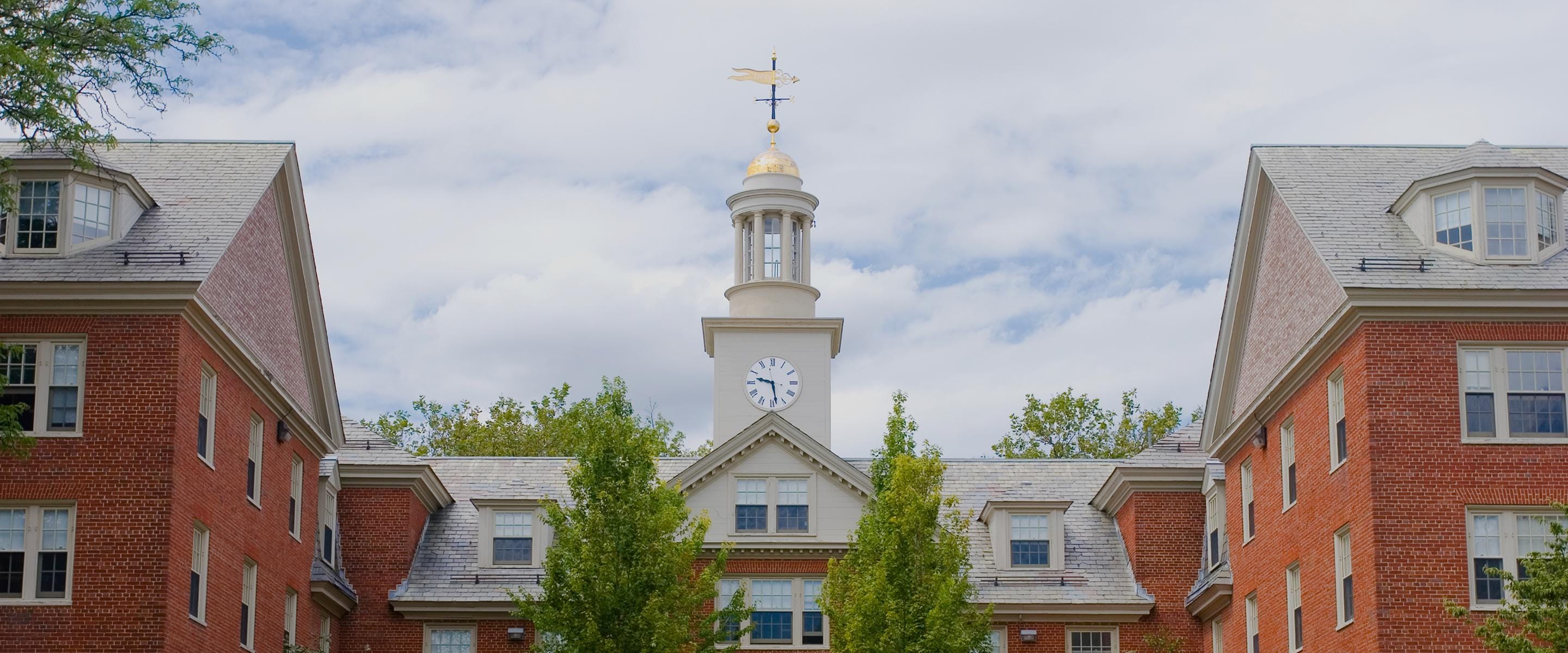
How To Get Into Brown University

How To Get Into Brown University

Providence, Rhode Island · Private

Acceptance Rate

5.4%

0.2%vs prev year

Applicants

48,904

4.7%vs prev year

Admitted

2,638

1.8%vs prev year

Enrolled

1,719

1.4%vs prev year

Yield Rate

65.2%

2.1%vs prev year

UG Enrollment

7,910

2.2%vs prev year

Source: Brown CDS 2024/25

Mariama A

Former Brown Admissions Officer

How hard is it to get into Brown?

Brown University admitted 5.4% of applicants in the last cycle, taking 2,638 students from a pool of 48,904. Early Decision, Brown's only early route with no Early Action alternative, shifts the rate to 14.4%. Those headline numbers describe selectivity, but they understate what actually decides a file.
By the time a file reaches a regional reader's desk, it has typically cleared an academic screen. Senior admissions officers filter the pool first, looking mainly at transcript strength, and files with weak coursework or grades rarely make it through. What lands on a regional reader's desk is a pool that has already been pre-qualified academically, which changes what the reader is evaluating.
That shifts what the six to eight minutes of a first read are actually for. With the academic question largely settled, the reader is weighing whether the file reads as a Brown student, and whether the rest of the application holds together as one compelling story.

Brown's regional readers open files where the academic question is largely settled. What remains is whether the application gives the reader something specific to advocate for in committee.

Any file that wasn't qualified was already filtered. The more senior admission officers filtered it out. When it got to my desk, I knew that academically, they were strong enough.

Mariama A

Former Brown Admissions Officer

What kind of student thrives at Brown?

Brown thrives on a particular kind of student, one who pursues interests across the academic map, lifts peers up, and is comfortable building their own structure. It’s the most liberal of the Ivies and self-selects for a different applicant than its peers. If Brown were sorted into a Harry Potter house, it would belong in Hufflepuff rather than Gryffindor, which would be better suited to Harvard. Hufflepuff is the house known for students who help others reach their goals without needing the spotlight. The university looks for curiosity across intellectual life, social life, and the way students engage with people whose backgrounds look nothing like their own.
Brown also has a strong cultural tradition of unconventional self-expression. Students who need a clear academic checklist, or who are uneasy around expressive freedom, tend not to settle in well. The Open Curriculum has no required courses, and the students who thrive are the ones who can build a four-year plan without one being given to them. The closest cultural cousin in admissions terms is UChicago, which attracts a similarly quirky pool, though the campuses feel very different in practice.

Curious across domains

The kind of curiosity that pulls a STEM student into a humanities class on their own.

Quietly capable

Willing to do the work without needing the credit, and to lift peers up rather than push past them.

At home without guardrails

Self-directed students thrive. Students who need a fixed checklist tend to feel adrift.

That's what Brown students are. If you're engaged in something, they'll do everything they can to help you reach that goal of yours.

Mariama A

Former Brown Admissions Officer

What does Brown look for in applicants?

Brown looks for five qualities that decide most close calls once a file is academically qualified. Its Common Data Set rates eight factors as Very Important, spanning academic measures like rigor, class rank, GPA, and testing alongside qualitative factors like essays, recommendations, talent, and character. The CDS list captures what Brown formally measures. The working list inside the reader's room, once the academic bar is cleared, is narrower than that.
— A cohesive narrative carries the most weight. Every section of the application has to confirm the same story. A student declaring a math major needs a transcript that exhausted the school's math offerings, testing that backs it up, activities that show real engagement, and recommendation letters that talk about how they think mathematically. Switching to a less competitive major on the Common App while the rest of the file points at something else is one of the most visible mistakes readers catch in committee.
— A credible plan for using the Open Curriculum is Brown's defining question, and it surfaces on every file. Readers want to know how the student will use a curriculum with no requirements. Generic answers pulled from Brown's website don’t hold up. The strongest applicants name specific classes outside their main interest and explain why they want to take them.
— Distance traveled shapes how every academic signal gets read. A 1450 SAT from a school where most students score around 1100 and few take APs can outweigh a 1580 from a hyper-resourced school where the student stuck to the standard track. Readers expect well-resourced students to push beyond what their school offers, including taking college-level courses outside of the high school when those resources exist.
— Local engagement points to stronger fit than global optics. Students who work in their own communities consistently impressed readers more than students who traveled for medical mission trips or other strategic-looking global experiences without local roots. A pre-med student volunteering at a low-income clinic in their own city reads stronger than the same student doing a two-week medical service trip abroad.
— Authentic voice ties everything together. Readers can tell when an essay is written for them, and they cross-check the voice against the rest of the application. International students' TOEFL writing, the video portfolio, supplement tone, and the way teachers describe the student all get compared against the essay. When the voice doesn't match, the file loses credibility.

A Brown application has to read as one student across every section. The fastest way to lose ground in committee is to write a transcript, an activities list, and a set of essays that could belong to three different applicants.

Do you need perfect grades to get into Brown?

Near-perfect, in practice. 89% of Brown's enrolled students finished in the top 10% of their high school class, and 98% in the top quarter. SAT scores cluster between 1510 and 1560 in the middle 50%, and ACT scores between 34 and 35. Brown doesn’t collect average GPA data, so class rank is the cleanest academic measure available.
Testing matters at Brown, but readers use it to confirm what the transcript already says. A strong transcript with weaker scores prompts a deeper reading, while a high score paired with a weaker transcript raises a flag that the score alone can’t lift. Brown reinstated standardized testing as a requirement for the Class of 2029 (entering Fall 2025) after a four-year test-optional period.

Academic signal(s) at a glance

Signal
Figure
Average GPA
Not published by Brown
Top 10% of class
89% of enrolled students
Top quarter of class
98% of enrolled students
SAT Composite (mid-50%)
1510–1560
ACT Composite (mid-50%)
34–35
Test policy
Required (Class of 2029 onward)

How do Brown applicants stand out beyond grades?

Brown applicants stand out beyond grades through three things, essays, activities, and the coherence of the story those pieces tell together. Past the transcript, these are the components that separate admits from the broader pool of qualified applicants.
The "Why Brown" supplement matters more than any other piece of supplemental writing. Readers ask the same question of every file. How will this student use the Open Curriculum? A vague or website-paraphrased response is one of the most common reasons strong files lose ground.
Activities are read for depth and local impact rather than title count. Brown admissions officers notice sustained engagement with a student's own community over time, and they also notice when a list is padded with short, strategic-looking entries that never connect to anything else in the file. One or two threads followed seriously outweigh a long list of brief commitments.
Coherence is what ties essays and activities into something a committee can advocate for. Applications that read as one student with one story get presented with a name attached, the neuroscience advocate, the classics writer, the public-health researcher. Files without a thread get presented by their statistics, and statistics alone rarely move the room at Brown.

“Why Brown” is the most consequential supplement Brown asks for. Every reader works through the file with the same question in mind. How will this student use a curriculum with no requirements? The answer either lives in this essay or it doesn't.

Why do qualified students get rejected from Brown?

Qualified students get rejected from Brown for reasons that have nothing to do with grades. Most rejections happen to applicants who are already academically strong, and five recurring failure modes account for the bulk of them.
— Pre-professional posture comes up most often. Students who read as already-decided econ, business, or pre-med applicants give the impression that they won’t use the rest of the curriculum. Brown readers use the term openly in committee, and it’s rarely a compliment. The same posture also shows up in heavily credentialed STEM applicants whose entire file points at one outcome.
— Generic "Why Brown" answers come up almost as often. Essays that paraphrase the website or list the Open Curriculum as a feature rather than apply it to the student's specific interests fail to answer the actual question.
— Strategic major switching is visible. Applying as a history major when every activity, course, and recommendation points at international relations is seen as an attempt to dodge a more competitive concentration. Readers raise it in committee, and it is rarely defensible.
— Inauthentic voice gets flagged. When the essay's writing level doesn't match the rest of the application, including TOEFL scores, the video portfolio, or other supplements, readers note the mismatch and the file loses ground.
— Arrogance gets caught. Academically perfect students whose applications read as self-promotional rather than generous tend not to get through, even when the profile is technically flawless. Brown's culture rewards students who pull others up, and readers protect that principle in committee.

Pre-professional kids — that was a term that came up. They didn't really want pre-professional kids, because pre-professional suggests they already know what they want to do and won't take advantage of the offerings.

Mariama A

Former Brown Admissions Officer

Brown rejects qualified students when the file fails to convince a reader that this applicant will use the Open Curriculum, and that they will be a generous presence on campus rather than a credential-chaser passing through.

How much does it actually cost to attend Brown?

Brown's total 2025-26 cost of attendance is approximately $97,284, covering tuition, fees, housing, food, and standard student expenses. The average annual net cost after aid is $25,184, according to the federal College Scorecard. Brown meets 100% of demonstrated financial need for every admitted student, and the average first-year aid package was $68,926 in the most recent reporting cycle. Forty-eight percent of first-year students received need-based aid. International students are eligible for institutional aid: 310 international students received aid averaging $82,269.

Cost at a glance

Item
Figure
Total cost of attendance (2025-26)
~$97,284
Demonstrated need met
100%
Average first-year aid package
$68,926

Is Brown worth it? Graduation rates and outcomes

Yes, by the numbers that matter. Brown's six-year graduation rate is 96%, and 99% of first-year students return for sophomore year. 90% of the Class of 2024 reported overall satisfaction with their Brown experience. The student-faculty ratio is 6:1.
Median earnings for Brown alumni ten years after entry are $94,678, compared with a national four-year-college median of $60,428.
Brown holds the lowest endowment among the Ivies, and the reason tells you something useful about the school. Brown alumni disproportionately enter non-profit work, public service, and lower-paying fields, a pattern that says more about student culture than about giving rates. Even so, the median earnings figure puts Brown well above the national midpoint. Students who choose Brown for the Open Curriculum tend to choose careers the same way, by interest rather than exit value. Graduate school placement is strong across disciplines, and the PLME program offers a structured pipeline to Brown's medical school for a small cohort admitted directly out of high school.

Outcomes at a glance

Metric
Figure
Six-year graduation rate
96%
Four-year graduation rate
~94%
Retention rate (Fall 2023 → Fall 2024)
99%
Student-faculty ratio
6:1

How to build a competitive Brown application

A competitive Brown application is built on three things: curiosity that shows up across the file, a coherent narrative that every section confirms, and a credible answer to how the student will use the Open Curriculum. The strongest applications make these three things obvious to a reader within the first few pages of the file. Crimson works with students from middle school onward to build the kind of academic and extracurricular record Brown readers recognize on sight.

Book a free consultation with one of our expert advisors.

How to Get Into Brown University: 2026 Admissions Guide