Why High School Research Matters For College Admissions
How admissions officers separate real research from resume padding


Fareen S
Researcher and education writer
Summary
High School Research matters in admissions because it demonstrates academic depth, intellectual independence, and the ability to work with uncertainty. It functions as proof of serious interest in a field, especially when paired with mentorship, tangible outputs, and clear reflection. It is not automatically impressive. Admissions officers evaluate research claims carefully, and they separate meaningful work from resume padding through authenticity, documentation, and the intellectual engagement the work reflects. This guide covers what counts as research, how admissions officers verify it, the four levels of research credibility, and when the time cost is worth it.
What counts as research in high school
Research vs reading about a topic vs a school project
Outputs that count as evidence
How admissions officers interpret research
Output | What it demonstrates | Where it typically appears |
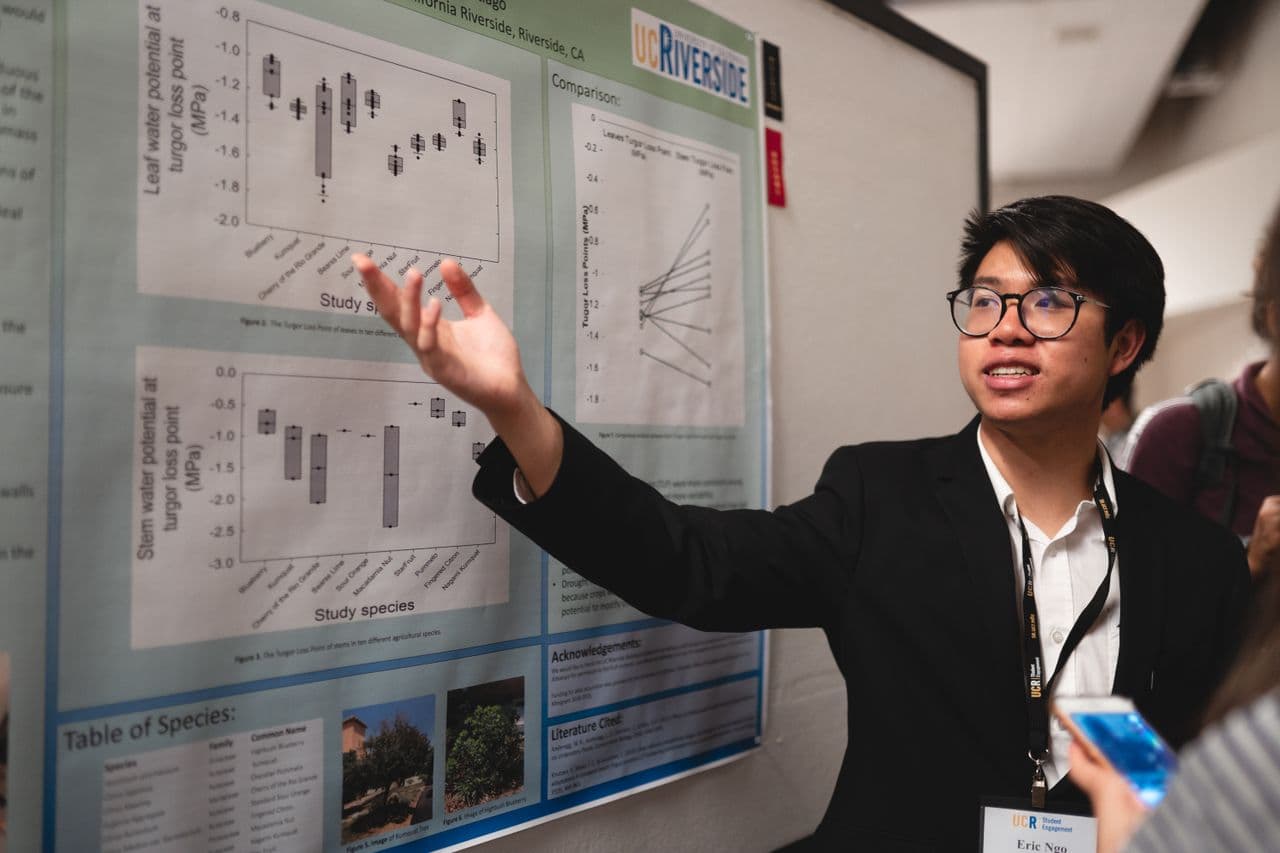
Research poster | Ability to summarize findings and present results clearly | School symposium, science fair |
Research abstract | Concise explanation of the research question and key findings | Student journals, conference submissions |
Research paper | Detailed explanation of methodology, analysis, and conclusions | Program deliverables, student research journals |
Competition submission | External evaluation of research quality | Science fairs, national research competitions |
What signals authentic vs manufactured research
What I look for when a student claims research is clarity about the question, the process, and the student's specific role. Vague descriptions usually indicate the student observed work rather than conducted it.

Gabe G.
VP of Product at Crimson Education
Why mentorship and verification matter
When research is high-impact (and when it's a distraction)
Which majors benefit most from research?
STEM
Experiments and data analysis, such as testing how bacteria grow under different temperatures
Computer Science
Building tools or training small models, documented in a code repository with clear steps
Economics
Analysis of public datasets, such as local housing prices or regional employment patterns
Psychology
Surveys or behavioral observation, such as a study of teenage study habits with simple stats
Humanities
Work with texts and sources, such as analyzing historical letters or speeches from a movemen
The opportunity cost of research
Grades
Leadership & Extracurriculars
Athletics
When to start research for college applications
Sophomore spring or the summer before junior year is the practical starting point. November 1 early deadlines leave little room for research that begins in late junior year.
The 4 levels of research credibility
Level 1: Independent project with documentation
Level 2: Mentored research with verification
Level 3: Selective programs or research internships
Level 4: Peer-reviewed publication or major competitions
How research plays out in real applications: three cases
Case A: Strong research story without publication
Urban Planning
A student interested in urban planning studied public transportation access in a mid-sized city, starting the summer before junior year. The student collected open transit data, mapped commute patterns, and interviewed local riders about service gaps. The final output included a 20-page research report, a data visualization dashboard, and a poster presentation at a regional student research symposium. A city planning graduate student reviewed the methodology and wrote a brief verification letter
Case B: Publication that helped only because positioning was strong
Neuroscience Research Internship
Another student completed a neuroscience research internship during junior year, assisting a university lab with data coding related to sleep patterns and memory formation. The lab later included the student as a secondary author on a paper in a student-focused academic journal.
The student did not rely on the title alone. The application explained the role in specific terms: the dataset, the coding process, and the statistical patterns observed. A recommendation letter from the supervising resea
Case C: "Research" that hurt because it looked inauthentic
A third student listed three separate research projects during senior fall, with titles spanning artificial intelligence, economics, and climate modeling. Each appeared under a different short-term program completed within a few weeks, with no research summary, abstract, or presentation supporting the work.
Admission officers noticed the warning signs: the topics lacked connection, the timeline suggested rushed participation, and the descriptions used general phrases such as "assisted with resear
Ethics and red flags in high school research
Ghostwriting and paid authorship
Inflated claims
Unclear contribution
In most cases the deciding question is simple: what did the student actually do? When an application answers that question clearly, the research becomes credible.
What former admissions officers say about research
What's the biggest misconception families have about research?
Families often believe publication equals success. Admissions readers look for curiosity, persistence, and evidence that a student stayed with a question long enough to learn something meaningful

Devery D.
Former Harvard Admissions Officer
How do admissions officers verify contribution?
We rarely rely on titles alone. We look for consistent details across the application which explain what the student studied, how the work happened, and what role the student played.
Devery D.
Former Harvard Admissions Officer
What's more impressive: publication or sustained iteration?
A publication can stand out, but sustained curiosity stands out more. When a student revisits a question, improves the method, and builds knowledge step by step, the learning becomes visible.
Devery D.
Former Harvard Admissions Officer