
University Insights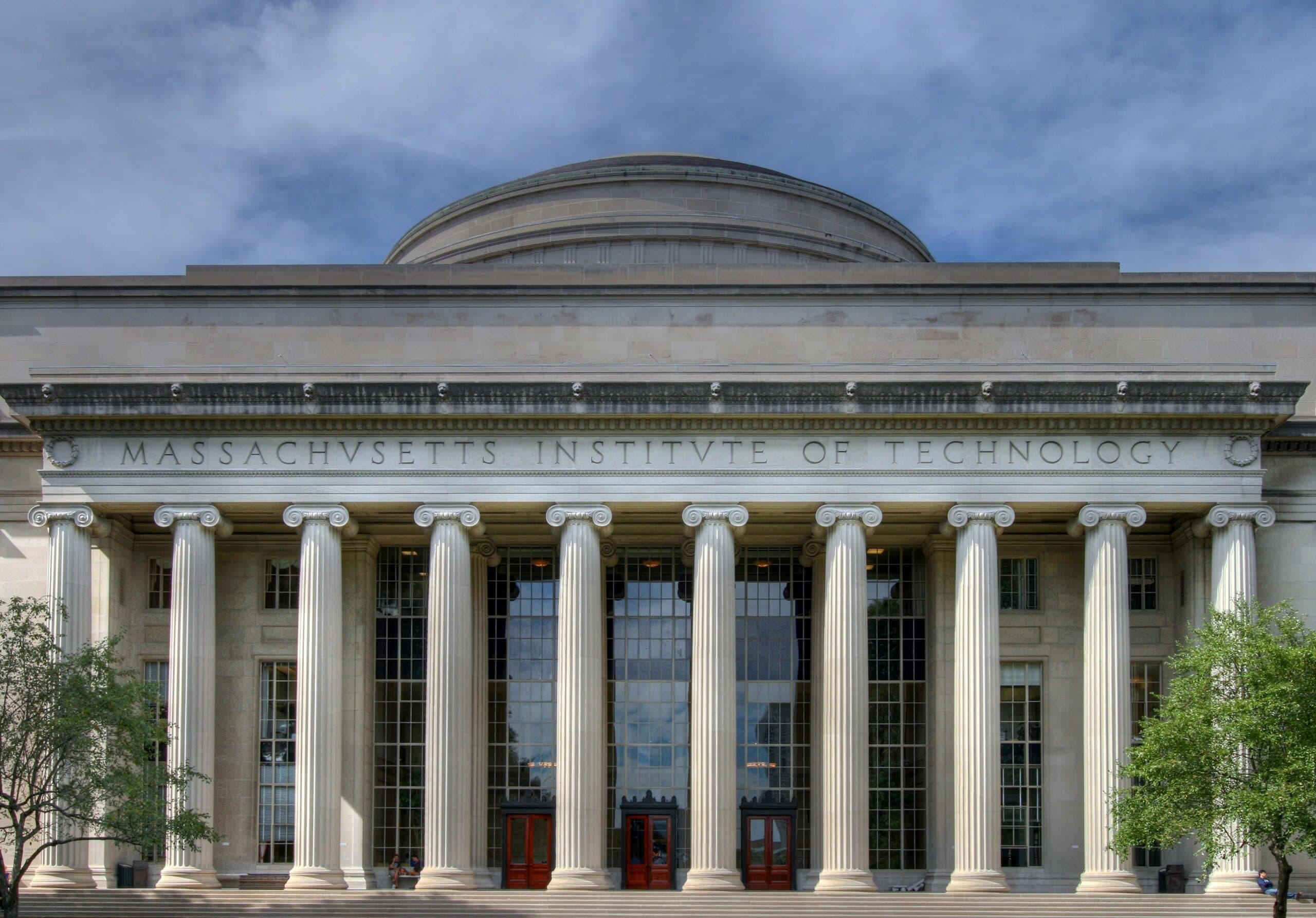 Last Updated:
What Are the Ivy Plus Schools?
How Ivy Plus schools compare to the Ivy League and how admissions work

Sally K.
UPenn & Wharton Graduate
Summary
Ivy Plus schools are a group of elite US universities that operate at the same level of academic rigor, selectivity, and long-term outcomes as the Ivy League, even though they are not part of the Ivy League athletic conference. The term is informal, but widely used by admissions officers and higher education insiders to describe institutions that compete directly for the same students, faculty, and global influence. In practice, Ivy Plus schools are peers of the Ivies, with differences driven by academic focus and institutional culture rather than prestige or ranking.
What are the Ivy Plus Schools?
Ivy Plus schools are a group of elite US universities that operate at the same academic, admissions, and outcomes level as the Ivy League Schools, despite not being part of the Ivy League athletic conference.
The term is informal, but it is widely used by admissions officers, counselors, and higher education insiders to describe institutions that compete directly with Harvard, Yale, and Princeton for the same students, faculty, and global influence.
In practice, Ivy Plus schools are peers of the Ivies. The distinction is historical, not hierarchical.
List of Ivy Plus Schools
Lists may vary because Ivy Plus is defined by academic and research leadership within specific fields, institutional admissions behaviour, and how universities are evaluated in practice rather than by a fixed or official designation.
School | Location | Acceptance Rate* | Defining Strengths |
Stanford, CA | 3-4% | Applied innovation, entrepreneurial initiative, execution-driven impact | |
Cambridge, MA | 4-5% | STEM problem-solving, hands-on building, technical creativity | |
Pasadena, CA | 5-6% | Theoretical science depth, research immersion, extreme academic focus | |
Chicago, IL | 5% | Abstract reasoning, intellectual rigor, idea-driven inquiry | |
Durham, NC | 5-8% | Academic excellence paired with leadership and campus engagement | |
Baltimore, MD | 6–7% | Research intensity, scientific inquiry, early academic specialisation | |
Evanston, IL | 7% | Interdisciplinary strength, creative–analytical integration | |
Nashville, TN | 6–7% | Undergraduate engagement, faculty access, community-oriented leadership |
What Makes a School “Ivy Plus”?
There is no official governing body or published criteria. Instead, Ivy Plus status reflects how universities are treated in real admissions, academic, and professional contexts.
Traits of an Ivy Plus School
— Acceptance rates comparable to or lower than Ivy League schools
— Global research output and funding at the highest tier
— Strong placement into elite graduate programs, fellowships, and employers
— Institutional influence that extends far beyond undergraduate education
Admissions officers do not treat these schools as “almost Ivy.” They treat them as equals.
Stanford University
Stanford is defined by applied innovation, entrepreneurial thinking, and intellectual risk-taking. Situated in Silicon Valley, it sits at the intersection of research, technology, and real-world execution in a way no Ivy League school fully replicates.
Admissions officers consistently prioritise students who act on ideas rather than simply excel academically. Successful applicants often demonstrate initiative through startups, independent research, engineering projects, or leadership in fast-moving fields such as computer science, business, and public policy. Intellectual curiosity matters, but execution and impact carry significant weight.
Students who thrive at Stanford tend to be builders and experimenters. The admissions process favours those who show momentum, originality, and the ability to turn abstract ideas into tangible outcomes.
Massachusetts Institute of Technology
MIT is the global benchmark for STEM education and hands-on problem solving. Its admissions philosophy centres on creativity through doing, not theoretical excellence alone.
MIT looks for students who build, test, and iterate. Competitive applicants often present evidence of engineering projects, research output, coding initiatives, or competition-level technical work. Collaboration matters deeply, and the culture strongly favours students who enjoy solving hard problems alongside others.
Strong grades are expected across the board. What differentiates admitted students is demonstrated technical imagination combined with a bias toward action and experimentation.
California Institute of Technology
Caltech is a small, intensely focused research institution with outsized global impact in science and engineering. It operates on a different scale and philosophy than most Ivy League schools.
Admissions officers evaluate whether a student genuinely thrives in an environment defined by depth, rigor, and sustained scientific inquiry. Successful applicants often show advanced engagement in mathematics, physics, chemistry, or computer science, frequently through research, Olympiads, or long-term independent study.
Caltech favours students who are intrinsically motivated by discovery rather than external recognition. Fit matters more here than almost anywhere else in the Ivy Plus group.
University of Chicago
The University of Chicago is defined by intellectual intensity and a commitment to ideas for their own sake. Its Core Curriculum reflects a campus culture centred on debate, abstraction, and theoretical rigor.
Chicago looks for students who enjoy questioning assumptions and engaging deeply with complex concepts. Competitive applicants often demonstrate sustained intellectual exploration through research, writing, philosophy, economics, or interdisciplinary inquiry.
Admissions officers pay close attention to intellectual fit. Original thinking, curiosity, and comfort with ambiguity are weighted more heavily than conventional polish or résumé breadth.
Duke University
Duke blends elite academics with a strong sense of community and campus identity. It is often recognised for its excellence in medicine, law, public policy, and environmental science.
Duke values students who combine academic ambition with leadership and engagement beyond the classroom. Successful applicants frequently show depth in one or two areas alongside meaningful involvement in campus life, athletics, or service-oriented leadership.
Admissions officers look for students who will contribute energy and direction to the campus culture while maintaining high academic standards.
Northwestern University
Northwestern is distinguished by its interdisciplinary strength across journalism, communications, performing arts, engineering, and business. Its proximity to Chicago reinforces strong links between theory and professional practice.
Admissions committees value students who integrate creative and analytical interests. Competitive applicants often show sustained involvement in areas such as media, theatre, research, or entrepreneurship, with clear evidence of growth and impact over time.
Northwestern tends to favour well-rounded applicants who demonstrate both academic seriousness and a clear personal direction.
Johns Hopkins University
Johns Hopkins is globally recognised as a leader in medicine, public health, and scientific research. Its admissions process strongly reflects this research-first identity.
Successful applicants typically demonstrate early and sustained engagement with scientific inquiry, whether through lab research, health-related initiatives, or advanced academic work. Depth and seriousness of purpose matter significantly.
Hopkins looks for students who are motivated by contribution and discovery rather than prestige alone. Intellectual maturity and commitment to research are central evaluation factors.
Vanderbilt University
Vanderbilt combines a strong undergraduate focus with the resources of a major research university. It is known for close faculty access, interdisciplinary study, and a collaborative campus culture.
Admissions officers value students who balance academic strength with character, leadership, and community engagement. Successful applicants often demonstrate initiative in arts, sciences, or service, alongside a clear academic trajectory.
Vanderbilt places particular emphasis on fit. Applicants who articulate how they will contribute to and benefit from a close-knit academic community tend to perform best in the admissions process.
Where the Ivy League Fits In
The Ivy League is a formal athletic conference established in the 1950s. Its academic prestige grew over time due to historical concentration of wealth, faculty, and influence, not because it was designed as a measure of academic superiority.
The eight Ivy League schools are:
From an admissions standpoint, the Ivy League is not the top tier. It is part of the top tier.
Ivy Plus vs Ivy League: Key Differences
Admissions committees do not sort applicants by labels. They evaluate institutional fit, contribution, and alignment with academic priorities.
Three differences matter in practice.
Field-Specific Leadership
Some Ivy Plus schools dominate entire disciplines.
— MIT and Caltech set the global standard in STEM
— Stanford leads in technology, entrepreneurship, and applied innovation
— Johns Hopkins defines modern medicine and public health
— Chicago anchors economics and theoretical social science
In these areas, Ivy Plus schools are often more competitive than most Ivies.
Academic Culture and Intellectual Style
Ivy Plus schools are not interchangeable.
— Chicago rewards abstract reasoning and debate
— MIT and Caltech value problem-solving over polish
— Stanford prioritises initiative and creative risk-taking
— Duke blends elite academics with a strong social ecosystem
Admissions officers look for students who thrive in these environments, not students chasing brand names.
Earlier and More Strategic Admissions Pathways
Many Ivy Plus schools have led the shift toward earlier, binding admissions rounds, especially Early Decision.
This reflects competition for top students rather than exclusivity for its own sake. For applicants, it means direction and positioning need to happen earlier than most families expect.
Public Ivies and How They Fit Into the Elite Landscape
Elite private universities are not the only schools competing at the top tier. A small group of public universities, often referred to as Public Ivies, regularly deliver Ivy League–level academic and graduate outcomes while operating within state-funded systems.
What Ivy Plus Schools Look for in Applicants
Across Ivy Plus institutions, strong grades and test scores are baseline expectations, not differentiators.
— Competitive applicants typically demonstrate:
— A clear academic or intellectual direction
— Sustained depth in one or two areas rather than broad but shallow activity
— Evidence of initiative, original work, or real-world impact
— Coherence across academics, extracurriculars, and future goals
This is why many high-achieving students are rejected despite perfect credentials.
Is the Ivy League the Finish Line?
For many students, no.
Ivy Plus schools sit on the same tier in terms of selectivity, outcomes, and long-term opportunity. The difference lies in mission, culture, and academic focus, not prestige.
Students who focus narrowly on the Ivy label often overlook schools that may be a stronger fit, more aligned with their interests, or equally competitive to enter.
Choosing the Right Ivy Plus School
The right choice depends on:
— Your intended field and research interests
— Preferred academic culture and learning style
— Willingness to commit early through binding admissions
— Long-term academic or professional goals
Because acceptance rates across Ivy Plus schools are uniformly low, success depends on a coordinated application strategy rather than credentials alone.
At Crimson Education, our counselors help students understand how each Ivy Plus institution evaluates applicants differently, where they are genuinely competitive, and how to position applications accordingly.
Final Thoughts
For students aiming for Ivy Plus schools and the Ivy League, clarity of direction rarely happens by chance. It develops through long-term planning, honest self-assessment, and a realistic understanding of how elite admissions decisions are actually made. Crimson Education supports students throughout this process with dedicated Ivy League admissions consulting, helping them build focused academic and extracurricular profiles and applications that reflect both ambition and authenticity.
If you want to understand how your current profile compares, or how to strengthen it strategically over time, you can Book a free consultation with one of our admissions experts to discuss next steps. You can also explore our upcoming events and webinars, where our strategists break down admissions trends, application strategy, and what top universities are really looking for in competitive applicants.